WPA vs WPA2 for Wireless Security

As the name suggests, WPA2 is a second, newer version of Wireless Protected Access (WPA) security and access control technology for Wi-Fi wireless networking. WPA2 is available on all certified Wi-Fi hardware since 2006 and was an optional feature on some products before that. It is designed to improve the security of Wi-Fi connections by requiring use of stronger wireless encryption than what WPA requires. Specifically, WPA2 does not allow use of an algorithm called TKIP (Temporal Key Integrity Protocol) that has known security holes (limitations).

Most wireless routers for home networks support both WPA and WPA2 and administrators must choose which one to run. Obviously, WPA2 is the simpler, safer choice. Some techies point out that using WPA2 requires Wi-Fi hardware to work harder in running the more advanced encryption algorithms, which can theoretically slow down the network’s overall performance compared to running WPA. Network owners can make their own choice but should run experiments to decide whether they notice any difference in their networks speeds with WPA2 vs. WPA.

Parallels Desktop for Mac

With Parallels Desktop for Mac, you can seamlessly run both Windows and Mac OS X applications side-by-side without rebooting. MacBook_Air_13in_PD8_cmyk
Drag and drop files between Windows and Mac applications and launch Windows applications from your Mac dock.

Powerful performance lets you run Windows productivity applications, even graphics intensive ones, with ease.

With Parallels Desktop, you can:

• Open Windows programs side-by-side with your Mac OS X applications, without having to restart
• Copy and paste text and drag and drop objects between Mac and Windows applications
• Run Windows games and other 3D programs
• Transfer all your data from a PC and use it on your Mac
• Easily share files, devices, and other resources between Windows and the Mac
• Install other operating systems, such as Linux, Google Chrome OS, another copy of OS X Mountain Lion, and Mac OS X Server, and use them together

Windows 8.1 for Business

Someone’s business device should be just as customized, responsive, and easy to use as their own personal device. Each person in your organization has unique needs. Some need a highly mobile, always connected device. Others need the high performance of a notebook packed with features. Windows 8.1 provides flexibility and choice across a range of options–touch, type, or voice input–individuals can choose the device that best fits their needs.

Workers can customize their Windows 8.1 Preview device to suit their individual needs and work styles. Multiple windows and multimonitor enhancements allow workers to arrange their apps, sites, customize their Start screen, and change their desktop just the way they need to. IT professionals can allow workers to customize their Start screen with relevant apps and live tiles or they can choose to manage the Start screen experience through Group Policy either for individuals or for groups.

With new desktop enhancements, including the new Start button, workers can easily transition between the Start screen and the desktop. IT professionals can also customize the Start button to open the Apps view, which provides a complete list of installed apps. This list can be reordered by category, date, or name, and desktop apps can appear at the front of the list. Windows 8.1 can also boot right to the desktop. In fact, you can start directly in any view– the Start screen, Apps view, the desktop, or even a single app. Make important apps easily accessible in the Start screen on company-issued devices. This includes the ability to manage different Start screen configurations for different groups and roles by using Group Policy.

With assigned access, you can enable a single Windows Store app experience on dedicateduse devices. You might want to run a customer service app in a retail store device, or have a single learning app running in school. Enabling assigned access turns on a predefined set of  filters that blocks other actions so the specified app runs and system files and other apps can’t be accessed. Windows 8.1 makes managing personal devices much easier for Bring Your Own Devices

(BYOD) programs. New features make it possible to more securely allow access to corporate resources–like work folders, apps, and services–from any Internet connection. The management,security, monitoring, and compliance benefits of Windows Server,
Active Directory, Group Policy, Domain Join, System Center, Windows Intune, and MDOP, can continue to support devices running Windows 8.1. You can also benefit from the high levels of hardware and software compatibility with Windows 8.1. The majority of Windows
desktop apps and Windows Store apps will run on Windows 8.1.

Windows 8.1 Preview delivers enterprise-grade security through enhanced access control, improved data protection, and new features that make devices less susceptible to malware threats. Windows 8.1 Preview and Windows Server together introduce many features that make  it easier for you to embrace BYOD programs, keeping your people productive on their own mobile devices, while company information is protected. Windows 8.1 gives you more options to manage user-owned and controlled devices. New Open Mobile Alliance Device Management (OMA-DM) capabilities are built in and enable mobile device management using third-party MDM solutions with no additional agent required. Enhanced policies allow you to manage more settings from both Windows Intune and the third-party MDM solutions for both Windows 8.1 and Windows RT 8.1 devices.

Windows 8.1 personal devices include an option to join the workplace, allowing workers to access network resources, such as a SharePoint site from their personal devices. They can also choose to enroll in the device management service, to gain access to access
to the company portal, get corporate apps, and manage their own device. With work folders, they can access their work files across all their devices, with automatic synchronization to your file servers in your data center and back out to their other devices. IT professionals can enforce dynamic access control policies on the Work Folder Sync Share (including automated rights management.) When workers remove their device from the corporate network, the corporate data can no longer be accessed.

Why SSL VPN?

There are three major families of VPN implementations in wide usage today: SSL, IPSec, and PPTP. OpenVPN is an SSL VPN and as such is not compatible with IPSec, L2TP, or PPTP.
The IPSec protocol is designed to be implemented as a modification to the IP stack in kernel space, and therefore each operating system requires its own independent implementation of IPSec.

By contrast, OpenVPN’s user-space implementation allows portability across operating systems and processor architectures, firewall and NAT-friendly operation, dynamic address support, and multiple protocol support including protocol bridging.

There are advantages and disadvantages to both approaches. The principal advantages of OpenVPN’s approach are portability, ease of configuration, and compatibility with NAT and dynamic addresses. The learning curve for installing and using OpenVPN is on par with that of other security-related daemon software such as ssh.

Historically, one of IPSec’s advantages has been multi-vendor support, though that is beginning to change as OpenVPN support is beginning to appear on dedicated hardware devices.

While the PPTP protocol has the advantage of a pre-installed client base on Windows platforms, analysis by cryptography experts has revealed security vulnerabilities.

Exchange Server 2013

So, what’s new in Exchange Server 2013?

The new features and functionalities include:

Session Indifference: In Exchange 2013, the client access and mailbox components reside on the same Mailbox server and no session affinity is required at the Client Access servers. This allows inbound connections to Client Access servers to be balanced using the techniques provided by load balancing technology such as round-robin and least connection.

Unified Messaging: Unified Messaging in Exchange 2013 contains essentially the same voice mail features included in Exchange 2010. Certain new and enhanced features have also been added to the existing features. Exchange 2013 integrates with SharePoint 2013 to allow users to collaborate more effectively. OAuth authentication lets partner applications to authenticate as a service.

Anti-malware protection: The implicit malware filtering capability of Exchange 2013 helps protect your network from malicious software spreading through email messages. If malware is detected, the message is deleted. Notifications can also be sent to administrators when an infected message is deleted and not delivered.

Batch mailbox moves: This new move architecture is built on top of MRS (mailbox replication service) moves with advanced management capability. The features include:

    • Ability to move multiple mailboxes in large batches.
    • Email notification during move with reporting.
    • Automatic retry and prioritization of moves.
    • Periodic incremental syncs to migrate the changes.

Automatic recovery from storage failures: In addition to the Exchange 2010 bug check behavior, Exchange 2013 includes additional recovery behavior for long I/O times and excessive memory consumption.

Support for multiple databases per disk: Exchange 2013 includes enhancements that enable you to support multiple databases on the same disk.

Automatic reseed: This helps you to quickly restore database redundancy after disk failure. If a disk fails, the database copy stored on that disk is copied from the active database copy to a spare disk on the same server.

Managed Store: The newly rewritten Information Store processes in Exchange 2013 is known as Managed Store. This new Managed Store is written in C# and tightly integrated with the Microsoft Exchange Replication service to provide higher availability.

Microsoft Software Assurance

Microsoft Software Assurance (SA) is a Microsoft maintenance program aimed at business users who use Microsoft Windows, Microsoft Office, and other server and desktop applications. The core premise behind SA is to give users the ability to spread payments over multiple years, while offering « free » upgrades to newer versions during that time period.

The full list of benefits, effective March 2006, are as follows:

  • Free upgrades: Subscribers may upgrade to newer versions of their Microsoft software
  • Access to exclusive software products
  • Training: Free training from Microsoft and access to Microsoft E-Learning, a series of interactive online training tools for users. This training can only be taken at a Microsoft Certified Partner for Learning Solutions and can only be redeemed for training that is categorized as Microsoft Official Curriculum.
  • Home use: Employees of a company with SA can use an additional copy of Microsoft software
  • Access to source code for larger companies (1,500+ desktops)
  • 24×7 telephone and web support
  • Additional error reporting tools
  • Free licenses for additional servers provisioned as « Cold backups » of live servers
  • Access to Microsoft TechNet managed newsgroups
  • Access to Microsoft TechNet downloads for 1 user
  • Extended Hotfix support: Typically Microsoft charges for non-security hotfixes after mainstream support for the product has ended (e.g. 5 years for Windows); this charge is waived for SA customers

All benefits are generated by a Benefits Administrator at the customer organization and can be managed on the Microsoft Volume Licensing Service Center.

Versions of Windows 8

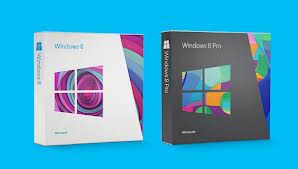
Windows8

Windows 8
Windows 8 is the basic edition of Windows. This edition contains features aimed at the home users and provides all of the basic new Windows 8 features including the Start screen with semantic zoom, live tiles, Windows Store, Internet Explorer 10, connected standby, Microsoft account integration, the Windows desktop and more.


Windows 8 Pro
Windows 8 Pro is comparable to Windows 7 Professional and Ultimate and is targeted towards enthusiasts and business users; it includes all the features of Windows 8. Additional features include the ability to receive Remote Desktop connections, the ability to participate in a Domain, Encrypting File, Hyper-V, Group Policy, as well as  BitLocker.


Windows 8 Enterprise
Windows 8 Enterprise provides all the features in Windows 8 Pro (except the ability to install the Windows Media Center add-on), with additional features to assist with IT organization. This edition is available to Software Assurance customers, as well as MSDN and Technet Professional subscribers.


Windows RT
Windows RT will only be available pre-installed on ARM-based devices such as tablet PCs. It will include touch-optimized desktop versions of the basic set of Office 2013 applications to users and support device encryption capabilities. Several business-focused features such as Group Policy and domain support are not included.
Desktop software that run on previous versions of Windows cannot be run on Windows RT.

Unlike Windows Vista and Windows 7, there are no Starter, Home Basic, Home Premium, or Ultimate editions.

Saas

Saas (Software as a service), sometimes referred to as « on-demand software », is a software delivery model in which software and associated data are centrally hosted on the cloud or internet. SaaS is typically accessed by users using a thin client via a web browser.

SaaS has become a common delivery model for many business applications, including accounting, collaboration, customer relationship management, management information systems, ERP, invoicing, HRM, content management (CM) and service desk management. SaaS has been incorporated into the strategy of all leading enterprise software companies. One of the biggest selling points for these companies is the potential to reduce IT support costs by outsourcing hardware and software maintenance and support to the SaaS provider. Here are some of the benefits of Saas:

High Adoption
SaaS applications are available from any computer or any device—any time, anywhere. Because most people are familiar with using the Internet to find what they need, SaaS apps tend to have high adoption rates, with a lower learning curve.

Lower Initial Costs
SaaS applications are subscription based. No license fees mean lower initial costs. Having the SaaS provider manage the IT infrastructure means lower IT costs for hardware, software, and the people needed to manage it all.
Painless Upgrades
Because the SaaS provider manages all updates and upgrades, there are no patches for customers to download or install. The SaaS provider also manages availability, so there’s no need for customers to add hardware, software, or bandwidth as the user base grows.
Seamless Integration
SaaS vendors with true multitenant architectures can scale indefinitely to meet customer demand. Many SaaS providers also offer customization capabilities to meet specific needs. Plus, many provide APIs that let you integrate with existing ERP systems or other business productivity systems.

Microsoft Office 2013

The interface across the entire suite of applications has been reinvented, mostly for the better. First off, the Ribbon, which disappointed many users when it first appeared in Office 2007, remains part of the new Office. But before you start grumbling, consider that Microsoft has made it optional this time around. So now you can show or hide the exhaustive collections of tools across every tab, and decide how much or how little you want to use them.
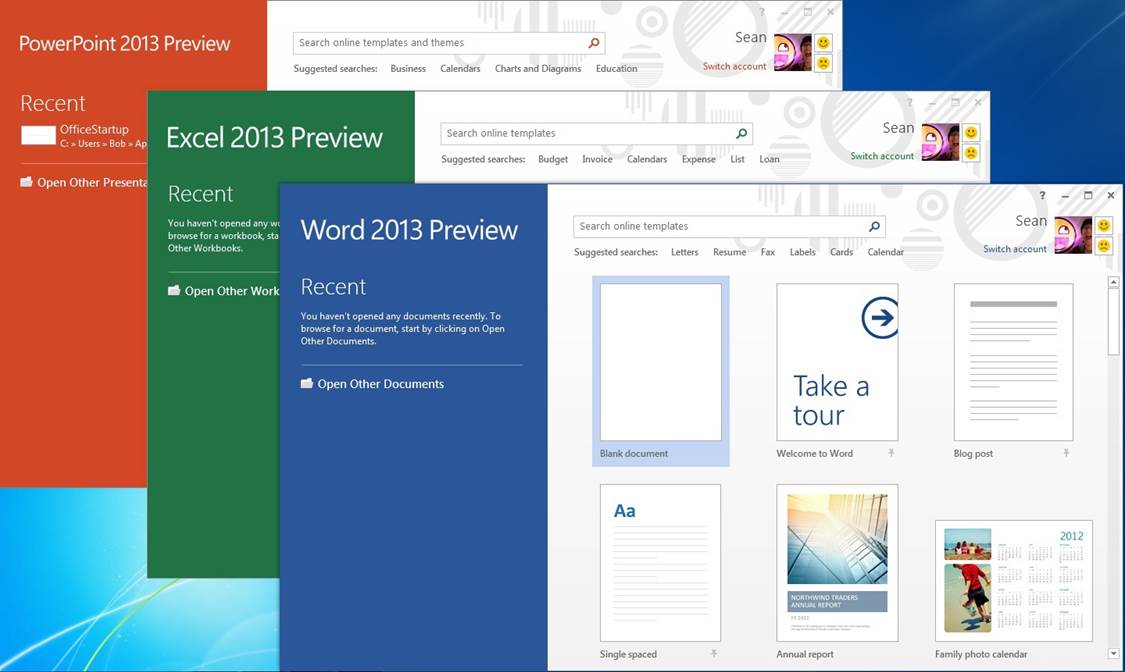
Aside from the Ribbon, the interface is similar but much simpler than it was in Office 2010 and earlier. Newly added start pages for Word, PowerPoint, and Excel help you get to recent documents attached to your account and new templates immediately upon launch. Flat buttons and plenty of white space make the interface look less crowded. Other interface tweaks are tablet-focused such as the radial menus in OneNote that show options (like sharing, search, and zoom tools) in a circle around the area you press. The general feel of the suite is more streamlined and more cloud-integrated, and the new start pages for the core apps will be especially useful for those looking at the same documents on several devices.

Office2013

Though you can only use Office 365 with a subscription on five machines, another new feature called Office on Demand will come in handy whenever you’re away from your selected devices. This feature lets you download a full copy of the software you need (such as Word or Excel) on any PC running Windows 7 or later, and shows you your recent documents just as you’d see them at home. When you’re finished making changes or edits to a document, you can close the application and it is removed from the PC you’re working on.

What is VoIP?

VoIP: Voice over IP  or voice over Internet Protocol commonly refers to the communication protocols, technologies, methodologies, and transmission techniques involved in the delivery of voice communications and multimedia sessions over Internet Protocol (IP) networks, such as the Internet. Other terms commonly associated with VoIP are IP telephony, Internet telephony, voice over broadband (VoBB), broadband telephony, IP communications, and broadband phone.  VOIP

Internet telephony refers to communications services (voice, fax, SMS, and/or voice messaging applications) that are transported via the Internet, rather than the public switched telephone network (PSTN).

The steps involved in originating a VoIP telephone call are signaling and media channel setup, digitization of the analog voice signal, encoding, packetization, and transmission as Internet Protocol (IP) packets over a packet-switched network. On the receiving side, similar steps (usually in the reverse order) such as reception of the IP packets, decoding of the packets and digital-to-analog conversion reproduce the original voice stream.Even though IP telephony and VoIP are used interchangeably, IP telephony refers to all use of IP protocols for voice communication by digital telephony systems, while VoIP is one technology used by IP telephony to transport phone calls.