
A hard drive is essentially a metal platter with a magnetic coating that stores your data. A read/write head on an arm accesses the data while the platters are spinning.
An SSD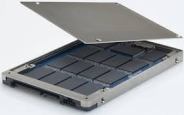 does functionally everything a hard drive does, but data is instead stored on interconnected flash memory chips that retain the data even when there’s no power present.
SATA drives come in varying speeds and capacities and SSD drives come in varying capacities. SSDs so much quicker than conventional SATA drives because there are no moving parts, there is no spinning disk like you would find in a SATA drive that has to read and write data to an actual disk. Boot up time is much quicker, cutting it down by 50 percent or more. SSDs are also lighter than the average SATA drive which makes it a great choice for a laptop drive. The one drawback to buying an SSD is cost, as these are pricey hard drives.
 Services Informatiques