FTP

File Transfer Protocol (FTP) is a standard network protocol used to transfer files from one host to another host over a TCP-based network, Image Source: wikipedia.orgsuch as the Internet.
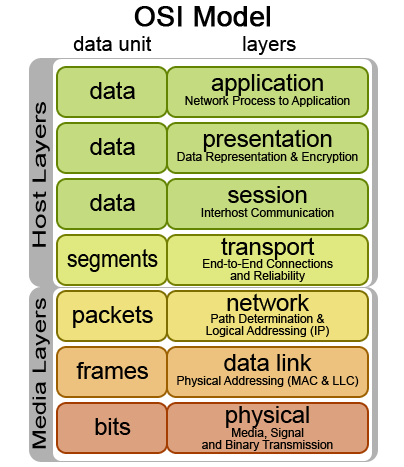
FTP is built on a client-server architecture and uses separate control and data connections between the client and server.

FTP users may authenticate themselves using a clear-text sign-in protocol but can connect anonymously if the server is configured to allow it.

FTP operates on the application layer of the OSI model, and is used to transfer files using TCP/IP. In order to do this an FTP server needs to be running and waiting for incoming requests. The client computer is then able to communicate with the server on port 21.

FTP is relevant because it helps businesses and indididuals share files, information and collaborate with confidence and in a secure matter with active directory integration or with other basis authentication.

IMAP vs. POP3

IMAP (Internet Message Access Protocol) and POP (Post Office Protocol) are different protocols for handling e-mail. Each has its own unique function and purpose. Protocol allows IMAP to deal with e-mail in a different way than POP does.

POP is basically a flow through entity—it just passes on the information to you at your e-mail program. When the POP e-mail server receives e-mail it stores it on the server until you to request it. By simply opening your email program (e.g., Outlook) you request the e-mail from the server by pressing the “Send” or “Receive” button. The e-mail program in essence asks the server if there is any mail waiting. If there is, it tells the server to send it to you.

IMAP on the other hand, is interactive with your e-mail program. It allows you to download e-mails from the server to your e-mail program the same as POP does. However, the difference is that when you request your e-mail from the server it sends a copy rather than sending the entire e-mail. It keeps a copy of the e-mail on the server while simultaneously keeping a copy on your computer.

Server Virtualization

Server virtualization or Hardware virtualization or platform virtualization refers to the creation of a virtual machine that acts like a real computer with an operating system.

Virtual machines are based on the host/guest paradigm. Each guest runs on a virtual imitation of the hardware layer. This approach allows  creation of guests that use different operating systems. The guest has no knowledge of the host’s operating system because it is not aware that it’s not running on real hardware. It does, however, require real computing resources from the host. Those resources can then be allocated on the guest machines (# of CPUs, memory, disk space, network adapters and more…)

Some of the most popular virtualization software include Microsoft Hyper-V, VMWare VSphere, Citrix Xenserver and VirtualBox.